
Why Pattern Scaling for Gender-Neutral Streetwear Is Breaking Traditional Manufacturing Rules
Quick Answer:Traditional size grading fails for gender-neutral streetwear because it relies on distinct male and female body proportions. Scaling fluid, oversized silhouettes requires a completely different approach to ease allowance, shoulder drop, and fabric drape—so the garment actually sits right across a wider spectrum of body types.
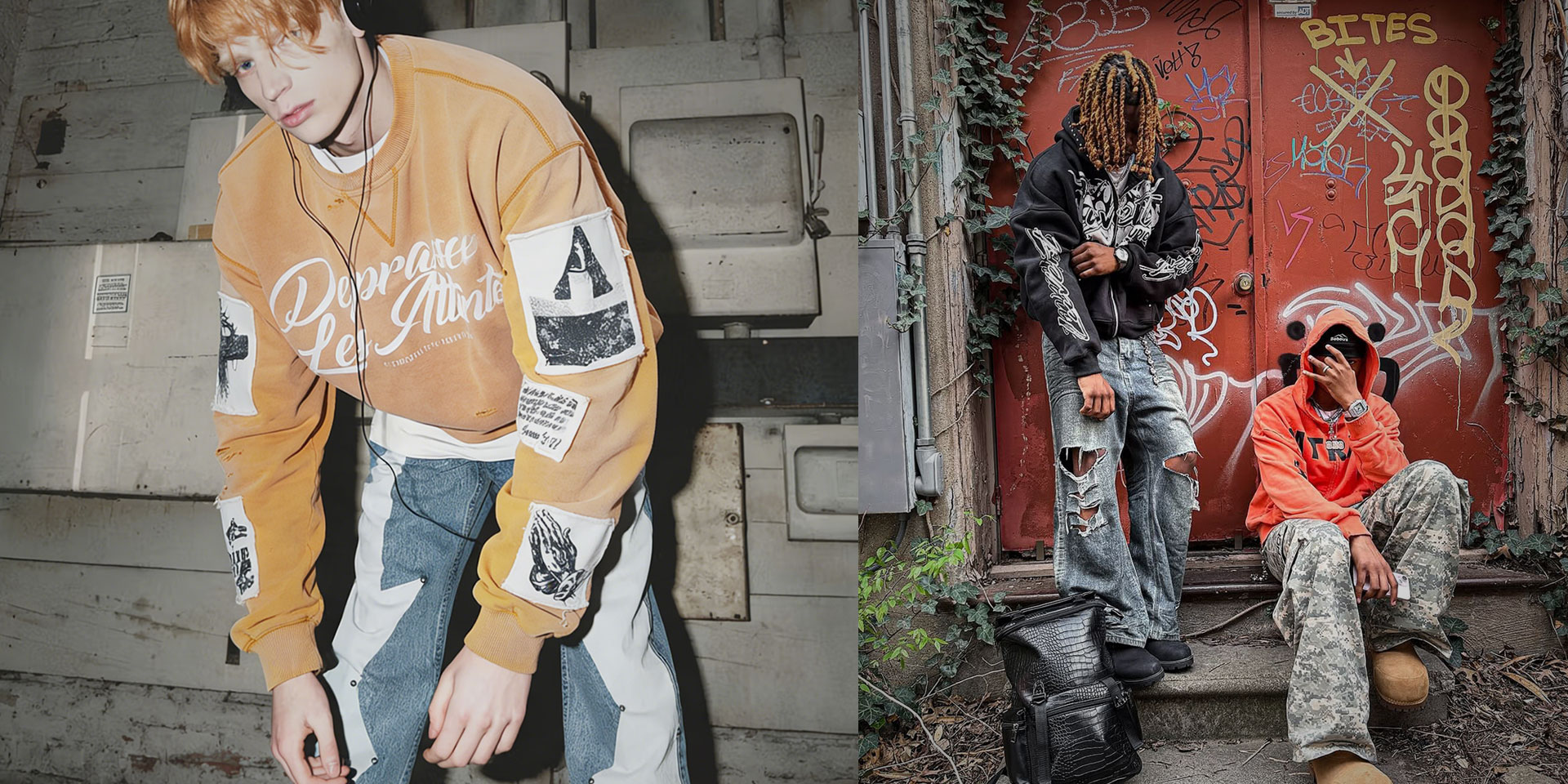
When a brand team signs off on a gender-neutral collection, the design intent is usually clear: a relaxed, inclusive silhouette that feels effortless regardless of who wears it. But the moment that tech pack hits the factory floor, what sounds like a progressive design philosophy often turns into a complex engineering problem. A washed boxy hoodie or a cropped football-inspired jersey might look perfect on the fit model, but scaling those proportions across a full size run without losing the intended attitude is where many production processes fall apart.
In recent seasons, established streetwear brands have been shifting away from simply offering "unisex" basics—which usually just meant sizing down men's cuts—toward intentionally engineered genderless silhouettes. This evolution changes the conversation between creative teams and their production partners. It's no longer just about whether a factory can execute heavy distressing or complex embroidery. It's about whether their pattern makers understand how a dropped shoulder should behave when graded up three sizes, or how a flare denim with exaggerated stacking needs to sit on entirely different hip structures.
This is a structural shift in streetwear manufacturing. The challenge isn't just aesthetic—it's mathematical. And for procurement teams and product developers sourcing from China-based or global streetwear apparel manufacturers, understanding how a factory handles this specific type of pattern scaling is becoming a critical part of evaluating long-term production viability.
Why Does Traditional Size Grading Fall Apart When Applied to Fluid Streetwear Silhouettes?
Quick Answer:Conventional grading uses rigid, gender-specific increments that distort oversized designs. When standard rules are applied to gender-neutral streetwear, smaller sizes often become disproportionately bulky, while larger sizes lose their intended drape and fluidity—resulting in a silhouette that doesn't reflect the original design.
Traditional apparel grading was built on a very specific set of assumptions. It assumes distinct anatomical differences between men and women, relying on established curves, dart placements, and incremental growth rules (like standard ASTM or ISO charts) to scale a pattern up or down. But modern streetwear doesn't play by those rules. The visual language of a distress-heavy zip hoodie or an oversized graphic tee relies on volume, drape, and strategic looseness rather than contouring to the body.
When a standard factory receives a tech pack for a genderless, oversized piece, their default instinct is often to apply traditional grading increments. The result? A medium might look exactly like the sample, but the extra-small ends up swimming in excess fabric around the armholes, while the double-extra-large becomes restrictive across the chest or shoulders—losing the relaxed drop-shoulder effect entirely.
The core issue is how ease—the extra room built into a garment beyond body measurements—is managed. In gender-neutral streetwear, ease is the design. It dictates how the silhouette sits on the body. A streetwear apparel manufacturer that truly understands fashion direction knows that you cannot simply add a flat two inches of width per size. The grading must be nuanced. The neck opening, the armscye depth, and the shoulder slope require different scaling ratios than the overall body width to maintain the garment's attitude across the entire size range.
How Do Anthropometric Realities Force Brands to Rethink Their Sourcing Strategy?
Quick Answer:Gender-neutral collections must accommodate a much broader variance in chest, hip, and shoulder measurements within a single size bracket. This requires sourcing partners who can integrate diverse anthropometric data into custom grading rules rather than relying on outdated, off-the-shelf sizing templates.
If you spend enough time reviewing fit samples with independent brands with real traction, you quickly realize that "unisex" is a notoriously difficult target to hit. The anthropometric reality is that a single garment now needs to accommodate a wider spectrum of shoulder widths, chest volumes, and hip structures without looking like it was borrowed from someone else's closet.
This complexity directly impacts how sourcing teams evaluate a . A factory that excels at standard menswear might struggle when asked to develop a pattern that needs to drape cleanly over narrower shoulders while still providing enough volume through the body. The variance in sleeve length alone becomes a major hurdle—a sleeve that stacks perfectly on a taller frame might completely swallow a shorter wearer if the grading isn't carefully calibrated.
Brands with validated market demand are realizing that they need production partners who don't just execute a tech pack blindly, but who actively question the grading rules. They need pattern engineers who understand that a 400gsm French terry behaves differently than a lightweight cotton when scaled, and who adjust the pattern accordingly. This level of technical engagement is what separates a generic factory from a . It's about building a foundation of sizing data that reflects the actual consumer base, not just an industry average from twenty years ago.
Where Do Production Risks Multiply When Scaling Oversized and Heavyweight Pieces?
Quick Answer:Scaling oversized garments amplifies pattern errors, especially with heavyweight fabrics. Minor grading miscalculations in the shoulder or neckline of a sample can turn into major fit issues in bulk production, leading to distorted silhouettes, unbalanced drape, and significant material waste.
The transition from a beautifully executed sample to a full bulk run is where the reality of gender-neutral grading truly sets in. It's one thing to nail the proportions on a single size medium washed fleece. It's an entirely different challenge to make sure the 2XL and the XS carry the same visual weight and attitude that the original design intended.
One of the most common production risks involves fabric weight and behavior. Streetwear heavily favors substantial materials—think 300gsm+ tees or rigid, heavy-ounce denim. When these fabrics are used in oversized, genderless silhouettes, they don't forgive pattern errors. If the grading pushes the shoulder seam too far out on a larger size, a heavy fabric won't drape softly—it will jut out awkwardly, destroying the intended line of the garment. Similarly, if the neckline isn't graded with restraint, the weight of an oversized hoodie can cause it to pull backward, choking the wearer.
This is where the concept of sample-to-bulk alignment becomes critical. Some manufacturers, such as , focus specifically on these intersections—where complex finishing, heavyweight materials, and nuanced pattern development meet. The risk isn't just that a few pieces fit poorly; it's that the entire size run loses the brand's signature aesthetic. Procurement teams evaluating China-based or global need to look for factories that conduct rigorous multi-size fit sessions and understand how different wash processes (like enzyme or acid washing) will affect the final graded dimensions due to shrinkage variations.
Why Does Sample-to-Bulk Alignment Break Down with Genderless Grading?
Quick Answer:The jump from a single approved sample to a bulk production run introduces massive variables. When grading rules for gender-neutral streetwear aren't stress-tested across the entire size spectrum, the bulk run often reveals structural flaws that the initial medium sample hid.
One of the most frustrating moments for product development teams is receiving a bulk shipment that looks nothing like the approved pre-production sample. The sample was perfect: the shoulder dropped exactly where it should, the chest volume felt substantial but not overwhelming, and the hem sat perfectly. But when the bulk arrives, the XS sizes look like they were cut for a completely different brand, and the XL sizes are pulling at the underarms.
This breakdown is often rooted in how the factory handles the transition from pattern grading to actual cutting and sewing. In traditional manufacturing, a factory might only cut a sample in a size medium. If the brand approves it, the factory applies standard grading rules and moves straight to bulk. But for gender-neutral streetwear, where the silhouette relies heavily on exaggerated proportions and specific drape, this approach is a recipe for disaster.
A specialized streetwear garment manufacturer understands that you cannot assume a linear grade will work. They know that the way a heavyweight cotton behaves when cut into a small pattern piece is different from how it behaves in a large pattern piece. The fabric's own weight changes the drape. If the factory doesn't conduct multi-size fit sessions—testing the extreme ends of the size run before cutting bulk—they are flying blind. This is why procurement teams must prioritize partners who build rigorous testing into their pre-production systems, rather than those who rush to hit a ship date at the expense of structural integrity.
How Do Fabric Choices Complicate Pattern Scaling for Unisex Silhouettes?
Quick Answer:Different fabrics respond differently to grading. A pattern scaled for a rigid denim will not work for a heavyweight fleece. The stretch, recovery, and weight of the material must dictate the grading increments, especially when creating fluid, gender-neutral shapes.
The relationship between fabric and pattern grading is often underestimated by brands entering the premium streetwear space. When a design team envisions a fluid, genderless tracksuit, they might select a dense, 400gsm French terry for its premium handfeel and structured look. But that density fundamentally alters how the garment needs to be graded.
If a factory uses the same grading template for that heavy French terry as they would for a standard 200gsm jersey, the resulting garments will fit completely differently. The heavier fabric has less give and recovery—it won't stretch to accommodate a broader shoulder or a wider hip the way a lighter knit would. In a gender-neutral context, where the garment must fit a variety of body shapes within a single size, this lack of stretch means the grading must be incredibly precise.
Complex finishing techniques like acid washing or enzyme washing introduce unpredictable shrinkage rates on top of all this. A washed boxy hoodie might shrink by 5% in length and 3% in width, but that shrinkage doesn't always behave the same way across all sizes. A streetwear production partner that truly understands these processes will factor specific shrinkage rates into the initial pattern scaling, so the final post-wash garment hits the exact dimensional targets required by the tech pack. This level of material-specific engineering is what separates a capable partner from a risky one—and it's something that US, UK, and EU streetwear brands should be asking about during the very first conversation with any potential manufacturer.
What Are the Hidden Costs of Ignoring Specialized Sizing in Streetwear?
Quick Answer:Ignoring the nuances of gender-neutral grading leads to high return rates, dead inventory in extreme sizes, and damaged brand reputation. The upfront cost of developing custom grading rules is minimal compared to the financial impact of a poorly fitting bulk run.
When brands evaluate production partners, the conversation inevitably turns to cost. It's tempting to choose the factory that offers the lowest per-unit price, especially when scaling up production volumes. However, what sounds like a simple sourcing question often turns into a costly lesson in manufacturing reality. The lowest quote usually implies that the factory is cutting corners on pattern development, relying on generic grading templates rather than investing the time to engineer custom rules for the brand's specific silhouette.
The hidden costs of this approach become apparent fast. If the grading is off, the extreme sizes (XS, S, XL, XXL) will fit poorly. In the e-commerce driven world of modern streetwear, a poor fit translates directly into high return rates. Not only does the brand lose the initial sale, but they also incur the costs of reverse logistics, restocking, and potentially liquidating dead inventory that simply doesn't fit anyone correctly.
There is also a significant cost to brand reputation. Consumers might not know the technical terms for "armscye depth" or "shoulder slope," but they know when a garment feels wrong. They know when an oversized fit feels clumsy rather than intentional and premium. Investing in a streetwear clothing manufacturer who understands the intricacies of gender-neutral pattern scaling is an investment in product integrity and long-term brand equity. It's about building a foundation that allows the brand to scale confidently, knowing that their core aesthetic will be maintained across every size they produce.
How Should Procurement Teams Vet Manufacturers for Gender-Neutral Capabilities?
Quick Answer:Procurement teams must ask specific questions about a factory's pattern engineering process, their experience with non-linear grading, and their protocols for multi-size fit testing. A strong partner will provide transparent answers and demonstrate a proactive approach to mitigating fit risks.
For sourcing and procurement teams working with established streetwear brands, vetting a new requires moving beyond surface-level capabilities. It's no longer sufficient to ask if a factory can sew a hoodie or apply a screen print. The vetting process must dig into the factory's technical infrastructure and their understanding of modern silhouette engineering.
When evaluating a potential partner, teams should ask detailed questions about their pattern making department. Do they use 3D CAD software to simulate grading? How do they handle ease distribution across a gender-neutral size run? Can they provide examples of how they've adjusted standard grading rules to accommodate oversized or fluid designs? A factory that is truly capable will welcome these questions. They will be able to explain their methodology clearly and demonstrate how they anticipate and solve proportional issues before they reach the bulk cutting stage.
Additionally, procurement teams should require multi-size fit samples as part of the onboarding process. Testing a size medium is standard, but requesting a size small and a size extra-large allows the brand to evaluate the factory's grading execution firsthand. This upfront rigorousness might extend the initial development timeline slightly, but it drastically reduces the risk of costly errors during bulk production. It establishes a baseline of technical competence and ensures that the factory is aligned with the brand's specific quality standards and aesthetic vision. For global streetwear brands sourcing from China or other manufacturing hubs, this kind of due diligence isn't optional—it's the difference between a strong collection and an expensive mistake.
UK, Portugal, Turkey, or China: Which Custom Streetwear Manufacturing Model Fits Your Brand?
Most sourcing problems do not appear when a factory says yes to a tech pack. They appear much later, when fabric sourcing, trims, wash effects, cutting accuracy, sewing tolerance, and delivery timing have to line up perfectly at the same time. On paper, many regions look capable of handling streetwear manufacturing. However, the reality of the supply chain is that producing a single, well-executed sample is entirely different from replicating that same execution across thousands of units without losing the silhouette imbalance, fabric hand-feel differences, or batch-level variation.
For established streetwear brands and independent brands with real traction, the decision of where to place production is rarely just about finding the lowest cost. It is about supply chain density, factory specialization, and the ability to control the transition from pre-production approval to bulk execution. When procurement teams and product development teams evaluate the manufacturing models of the UK, Portugal, Turkey, and China, they are essentially comparing four completely different ecosystems. Each region offers a distinct approach to managing the complexities of streetwear, from heavyweight cotton sourcing and acid wash coordination to complex graphic placement and final inspection. Understanding these differences is critical for brands looking to maintain consistency as their order volumes scale.
What does the UK manufacturing model actually offer streetwear brands beyond the "made in Britain" label?
The UK manufacturing model offers streetwear brands exceptional speed-to-market for local distribution, strong communication, and a highly controlled environment for smaller, high-margin capsule collections. However, it often struggles with deep supply chain integration, requiring brands to import fabrics and trims, which can complicate wash and print coordination during bulk production.
The reality of producing streetwear in the UK is that the region operates more as a specialized assembly hub rather than a fully integrated supply chain ecosystem. For independent streetwear brands with established sales channels looking to execute limited-run programs or highly specific cut-and-sew pieces, the UK offers undeniable advantages in oversight. Product development teams can physically visit factories in London, Manchester, or Leicester, allowing for immediate tech pack review, rapid pattern development, and real-time adjustments to fit and finishing. This proximity reduces the friction of time zones and language barriers, making the initial sampling phase highly efficient.
However, the limitations of the UK model become apparent when moving from sampling to bulk execution, particularly for technique-heavy streetwear. The UK lacks the deep supply chain density found in other regions. While a cut-and-sew streetwear factory in the UK might have excellent sewing capabilities, they rarely have in-house access to custom heavyweight fleece, specialized garment dyeing facilities, or advanced screen-printing setups. Consequently, brands often find themselves managing a fragmented supply chain—sourcing fabric from Italy or Asia, shipping it to the UK for cutting and sewing, and then coordinating with separate local facilities for washing and embroidery.
This fragmentation introduces significant supply chain risk points. When a brand is developing an oversized hoodie with a specific vintage wash and puff print, coordinating these elements across multiple independent local suppliers increases the likelihood of sample-to-bulk mismatch. If the fabric shrinkage behaves differently after the wash process, or if the graphic placement shifts during the final printing stage, the brand bears the responsibility of managing the fallout. Therefore, the UK model is best suited for established brands that have the internal resources to manage complex logistics, or for programs where the "made in Britain" narrative justifies the higher operational friction and production costs.
Why do established streetwear brands keep coming back to Portugal for premium production?
Portugal has built a reputation as the premier European hub for premium streetwear manufacturing by offering a highly integrated ecosystem focused on high-quality jersey and fleece, sustainable practices, and exceptional fabric finishing. It excels at delivering consistent, high-end wash and dye treatments with reliable sample-to-bulk execution.
Portugal occupies a unique position in the global apparel supply chain, particularly for premium streetwear brands focused on tactile quality. The region, centered heavily around Porto and the northern textile districts, operates with a level of factory specialization that bridges the gap between high-fashion craftsmanship and streetwear volume requirements. Unlike the fragmented model often seen in the UK, Portugal offers a dense, vertically integrated supply chain where knitting, dyeing, cutting, sewing, and finishing are frequently managed within a tight geographic radius, or even under a single roof.
For merchandising teams and design teams focused on heavyweight t-shirts, premium hoodies, and complex sweatsuits, Portugal's mastery of cotton is a major draw. The region is renowned for its ability to develop custom fabrics with specific weights and hand-feels, and its dye houses are among the most advanced in Europe. When a brand requires a highly specific pigment dye, an enzyme wash, or a consistent vintage fade across a large production run, Portuguese factories have the technical infrastructure to ensure batch-level variation is kept to an absolute minimum. This level of control during the print, wash, and embroidery testing phases is crucial for maintaining brand identity.
However, the Portuguese model is not without its constraints. As demand for premium streetwear production has surged, capacity has become a significant issue. Production calendars in Portugal are notoriously rigid, and lead times can be extensive. Brands must commit to their seasonal collection planning well in advance, leaving little room for rapid replenishment or mid-season pivots. Furthermore, while Portugal excels in jersey, fleece, and sustainable cottons, it is not always the most competitive or capable region for highly complex outerwear, technical nylons, or multi-fabric patchwork garments. For streetwear labels with clear product direction prioritizing fabric quality and ethical production narratives, Portugal remains a top-tier choice, provided they can align with the region's slower, more deliberate production rhythm.
What makes Turkey a serious option for streetwear brands with tight turnaround requirements?
Turkey provides a powerful balance of speed, scale, and strong domestic fabric sourcing, making it a highly effective manufacturing model for streetwear brands needing rapid replenishment. Its robust denim and cotton industries allow for quick pivoting, though complex custom developments may lack the precision found in other hubs.
When brands with validated demand and clear design direction need to bridge the gap between European proximity and Asian scale, Turkey emerges as a highly strategic sourcing partner. The Turkish manufacturing model is built on a foundation of massive domestic textile production. Unlike the UK, which imports most of its raw materials, Turkey grows its own cotton and weaves its own denim, creating a supply chain density that significantly accelerates the product development workflow. This internal access to raw materials means that fabric sourcing, sampling, and pre-production approval can happen at a much faster pace.
For e-commerce apparel brands with established audiences that rely on frequent drops and rapid restocks, Turkey's production calendar reality is a major advantage. The region is particularly strong in denim production, offering advanced wash houses capable of executing complex acid washes, stone washes, and distressing techniques at scale. Additionally, Turkish factories are highly adept at producing core streetwear staples—such as graphic tees and tracksuits—with lead times that are often shorter than those in Portugal or China, while still maintaining acceptable quality standards.
However, the trade-off in the Turkish model often lies in the execution of highly specialized or complex custom construction. While Turkish factories excel at speed and volume, they may struggle with the intricate, multi-technique requirements of premium streetwear. If a design calls for a heavy 400gsm custom-milled fleece combined with specific puff printing, intricate appliqué, and a highly controlled vintage wash, the sample-to-bulk execution in Turkey might show more variance than in a specialized facility elsewhere. The focus here is often on commercial efficiency rather than artisanal precision. Therefore, Turkey is best utilized by brands that need a reliable apparel production partner for high-volume, fast-turnaround items where speed-to-market outweighs the need for hyper-complex product development.
Why does China's supply chain depth still set the benchmark for technique-heavy streetwear production?
China’s streetwear manufacturing ecosystem offers unmatched supply chain density, allowing brands to execute highly complex, multi-technique garments with strict sample-to-bulk consistency. The sheer concentration of specialized fabric mills, dye houses, and decoration facilities enables a level of custom development that is difficult to replicate elsewhere.
Despite shifts in global trade and the rise of nearshoring, China remains the undisputed leader for technique-heavy streetwear programs. The reason is not merely cost; it is the unparalleled depth and density of the supply chain. In manufacturing hubs like Dongguan, Guangzhou, and Humen, the ecosystem is so concentrated that a single specialized streetwear factory can coordinate custom fabric milling, complex garment dyeing, high-density embroidery, and advanced DTG printing within a remarkably tight radius. This proximity allows for intense collaboration and rapid iteration during the tech pack review and sampling phases.
For streetwear labels with clear product direction, the true value of China-based streetwear production lies in its ability to handle complexity at scale. When a brand requires a multi-panel cut-and-sew jacket featuring custom hardware, mixed media decoration, and a highly specific silhouette, Chinese manufacturers possess the technical infrastructure to not only build the sample but to engineer the bulk cutting and sewing processes to ensure strict consistency. The risk of sample-to-bulk mismatch is significantly reduced because the factories have established systems for managing trim substitution, controlling shrinkage, and executing pre-production approvals with high precision. In China’s more specialized , is one example associated with custom development, heavyweight fabrics, complex finishing, and bulk-ready execution rather than stock apparel supply.
The primary challenge of the Chinese model is the management of distance and communication. While the technical capability is vast, procurement teams must be adept at navigating the nuances of overseas production. Miscommunications regarding fit tolerances or fabric hand-feel can result in costly delays if not caught during the pre-production phase. Additionally, the shipping logistics and potential geopolitical tariffs require careful planning. However, for established streetwear brands that have built robust product development workflows and require a manufacturing partner capable of executing uncompromising design visions with repeatable bulk consistency, China's manufacturing depth remains largely unmatched.
How do these four manufacturing models compare when brands move from sample to bulk?
The true test of a manufacturing model is its ability to maintain the integrity of the approved sample across thousands of units. The UK offers oversight but fragmented execution; Portugal delivers premium wash consistency but slower timelines; Turkey provides rapid scale but less technical precision; and China excels in executing complex, multi-technique bulk orders with high fidelity.
Moving from a single approved sample to a full bulk production run is where the reality of the supply chain truly manifests. It is the stage where unstable wash control, wrong graphic placement, and silhouette imbalances typically occur.
In the UK model, the proximity allows design teams to closely monitor the sampling phase, but the reliance on imported materials and fragmented local finishing facilities means that bulk execution is vulnerable to coordination failures. If a trim supplier is delayed or a local dye house struggles with a large batch, the entire production calendar is compromised.
The Portuguese model is built to mitigate these risks for premium jersey and fleece. Because the ecosystem is highly integrated, the transition from sample to bulk is generally very smooth, particularly regarding fabric quality and wash consistency. The risk here is less about quality degradation and more about capacity constraints; if a brand needs to scale a successful product quickly, the Portuguese system may not be able to accommodate the sudden increase in volume.
In Turkey, the transition to bulk is optimized for speed. The robust domestic supply chain ensures that raw materials are readily available, allowing for rapid cutting and sewing. However, the focus on efficiency can sometimes lead to batch-level variation, particularly if the product involves complex detailing or novel finishing techniques. Brands using Turkey must implement rigorous final inspection protocols to catch any deviations before shipping.
China’s model is designed to engineer the bulk process. Specialized factories in China do not just make a sample; they build a production system for that specific garment. This involves extensive testing of fabrics, washes, and prints before bulk cutting begins. While the initial development phase might require more intense communication, the resulting bulk execution is typically highly consistent, even for the most complex streetwear designs.
Which production model fits your brand's actual stage, volume, and product complexity?
Choosing the right manufacturing model requires aligning the brand's operational maturity, launch rhythm, and product complexity with the specific strengths of the region. There is no single best option, only the most strategic fit for a brand's current supply chain reality.
For streetwear brands evaluating their sourcing strategy, the decision must be rooted in supply chain reality rather than geographic prestige.
•Choose the UK if your brand operates on a model of highly limited, premium capsule collections where local oversight and a "made in Britain" narrative justify higher costs and fragmented supply chain management.
•Choose Portugal if your focus is on premium heavyweight cottons, sustainable narratives, and uncompromising wash consistency, and your brand has the operational maturity to plan seasonal collections well in advance.
•Choose Turkey if your brand relies on a rapid drop-and-replenish model, particularly for denim and core streetwear staples, where speed-to-market and high-volume capacity are the primary drivers of growth.
•Choose China if your product direction involves complex construction, multi-technique decoration, and custom fabric development, and you require a streetwear manufacturing partner capable of delivering strict sample-to-bulk consistency at scale.
Ultimately, as independent brands with real traction scale their operations, they often find that a hybrid approach—utilizing different regions for different product categories—is the most effective way to balance speed, cost, complexity, and quality in the demanding landscape of modern streetwear production.
 premium streetwear production partner specialized streetwear manufacturer Groovecolor streetwear clothing manufacturers streetwear apparel manufacturer streetwear manufacturers Groovecolor