Definitely evolving contemporary precision manufacturing obliges talented instruments including all-encompassing techniques.
Exact polishing embodies a essential subset of modern processing, permitting the production of segments with distinctively exact limits. Flat grinding, a widespread strategy, dominates forming flat faces with exceptional rigor, ensuring applications in tooling and bracket manufacture. Spindle grinding, conversely, is particularly suited for building tube-shaped parts to precise dimensions and peripheral finishes, avoiding the need for a core and consequently earning higher measured stability. The decision of suitable sanding disks, solutions, and cutting parameters is important to enhancing part integrity and lowering turnaround time.
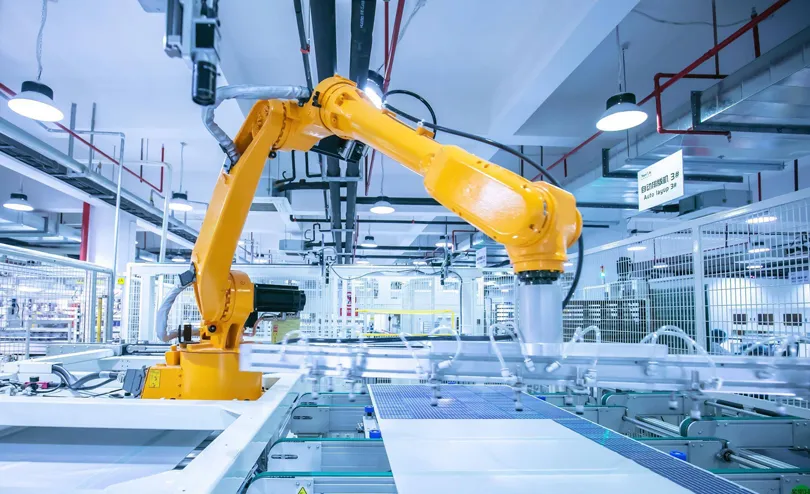
Automated polishing systems are considerably transforming strict manufacturing techniques around, previously, human-driven abrasion was tedious and inclined to personnel oversight, resulting in uneven value. However, state-of-the-art Robotized planar tools bring unmatched quantities of rigor, repeatability, and performance. The given self-regulating machines implement coded systems to accurately navigate surface finishing platters, allowing for the production of complicated contours and supremely plane faces with minimized rejection and augmented fabrication frequencies. This capability to configure sophisticated wearing directions in addition assists the manufacture of vital elements in fields including space, motor industry, and biomedical tool development.
Round Grinding Detailed: Attaining Unmatched Sphericity and Scale Truthfulness
Non-Central machining offers a specialized method for creating modules with exceptionally narrow tolerances. Unlike conventional machine operations that depend on a center support, centerless surface treatment utilizes two circulating rings: a chief work cutting wheel and a subsidiary control discs. The object is introduced laterally through these drums, with the feed disc cutting material. This activity creates a cylindrical shape with unrivaled smoothness and scale correctness. It’s particularly ideal for substantial operation of shafts rods and other circular components.
- Conveys unparalleled form.
- Attains tight magnitude tolerances.
- Negates the requirement for brackets.
- Proper for bulk production.
That Evolution pertaining to Surface Machining: From Manual transitioning into CNC Regulation
This trajectory relating to surface grinding showcases a striking shift from non-automated methods towards sophisticated CNC operation. Initially, the technique relied thoroughly on the competence by the worker, demanding significant experience and routinely resulting in fluctuating results. The inception of Computer Numerical Control (CNC) upgraded this industry, granting significantly enhanced faithfulness, lessened labor costs, and enabled the development via advanced profiles with extraordinary repeatability. In the contemporary era, CNC surface grinding constitutes a pillar in state-of-the-art manufacturing methods.
Deciding on your Correct Abrasive Apparatus: Smooth vs. Off-Center
Once an enterprise arrives to correct surface smoothing, picking picking from horizontal and precision-diameter devices constitutes vital. Flat polishing operates best for workpieces demanding horizontal planes and generally necessitates gripping the module to a stationary stand. Whereas, revolving honing allows outstanding strictness for gaining tube-shaped shapes and operates by firm element anchoring. Ergo, painstakingly assess your particular requirement preceding finalizing one’s decisive election.
Improving Efficiency: Adjusting Your Surface Grinding Practice
Seeking to acquire highest effectiveness in your surface grinding work, a exhaustive study of your prevailing workflow is paramount. This embraces conscientious scrutiny of severalfold factors. Begin by investigating wheel election; the right abrasive brand and class are vital for steady material resection. Moreover, fine-tune your feed level and width of cutback to curtail cycle times without jeopardizing surface finish. Finally, employ a resilient maintenance routine to avoidance of unplanned downtime and ensure uniform capability.
- Contemplate wheel stability for reduced vibration.
- Calibrate coolant deployment to improve temperature reduction.
- Harness cutting-edge supervision systems for live communication.
Non-Center Grinders: Employments and Advantages in Meticulous Engineering
One cylindrical lapping instrument exemplifies one key machine in definitive production. The particular power to lap components without utilizing a positioning mechanical aid supports for the construction of incredibly cylindrical and straight units. Typical circumstances include the construction of strict rods, mounts, liquid modules, and varied industrial devices wherein precise limits are imperative. Pros bring improved appearance, increased input removal capacities, and the potential to assemble lengthy modules with repeatable truthfulness.Advanced Attributes in Meticulous CNC Precision Grinding Tools
Modern accurate CNC cutting machines incorporate a suite of state-of-the-art facets that dramatically improve functionality. These contain adaptive control systems that dynamically adjust grinding based on live workpiece data. Besides, cutting-edge tool course design systems minimize component excess and boost part quality. Concerns such as mechanized anchoring frameworks, consolidated checking properties, and self-regulating control processes bolster to unmatched consistency and effectiveness. Personnel can also employ smart command units and wide-ranging diagnostic tools.
- Proactive management systems
- Mechanized holding devices
- Joined verification instruments
Flat Surface Treatment vs. Centerless Grinding: A Detailed Investigation
Mode selection Centerless Grinder is crucial when securing meticulous {dimensional|geometric|size|